Rooftop Solar vs Open Access Solar: Which Is Right for Your Factory in 2026?
Indian industry is buying solar power faster than ever, but it is buying it in two very different ways. Some factories put panels on their own roof. Others buy power from a solar park hundreds of kilometres away through the grid, a route called open access.
Both can cut your electricity bill. They are not the same product, though. They differ on size limits, approval process, grid charges and how much control you keep. This guide explains the difference in plain words, so you can decide which route fits your site, or whether you need both.
What is the difference between rooftop solar and open access solar?
Rooftop solar is generated on your own premises and used on site. Open access solar is generated at a remote solar farm and delivered to you through the transmission and distribution network.
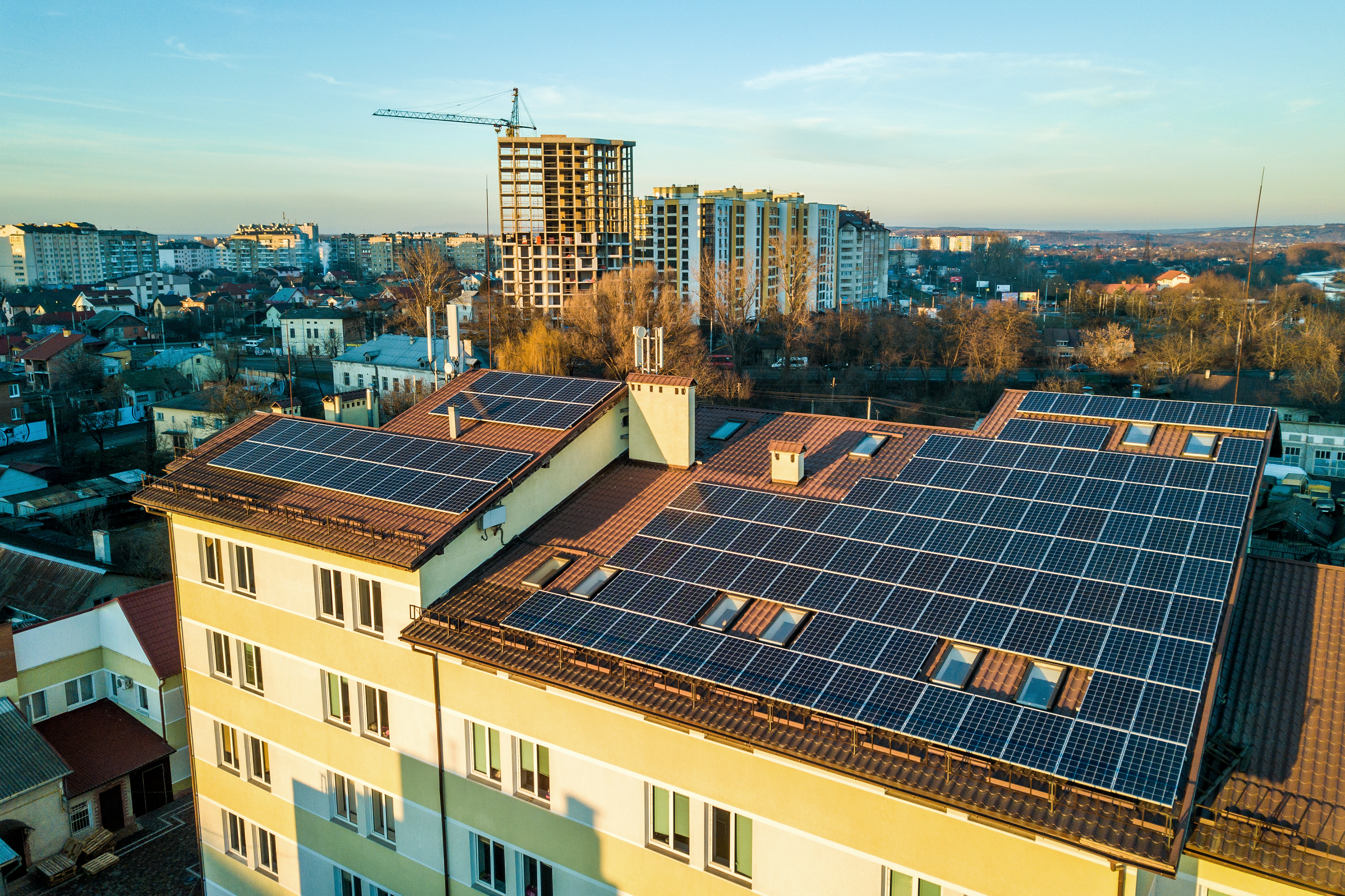
With rooftop solar, the panels sit on your factory shed, warehouse or car park. The power flows straight into your internal wiring. Your discom (distribution company, the local power utility) only comes in for metering any surplus.
With open access, the plant sits somewhere else, often in a sunnier, cheaper-land state like Rajasthan or Karnataka. As pv magazine explains, open access lets commercial and industrial (C&I) consumers buy electricity from off-site solar projects through the grid, "rather than relying solely on their local distribution companies." The power is usually supplied under a third-party PPA (Power Purchase Agreement) or a captive or group-captive arrangement, where you hold a stake in the generating company.
How fast is open access solar growing in India?
Very fast. India added nearly 6 GW of solar open access capacity in the first half of 2026, up 42% from about 4 GW a year earlier, according to Mercom India.
Key figures from Mercom's Q2 2026 open access report:
- 3 GW was added in Q2 2026 alone, the highest quarterly addition on record and 10% more than Q1.
- Cumulative solar open access capacity stood at 36 GW as of June 2026.
- Karnataka holds 21% of that capacity, with Rajasthan and Maharashtra at 16% each.
- Rajasthan led Q2 additions with a 25% share.
Mercom says part of the rush came from developers hurrying to commission projects before the phased reduction of the interstate transmission charges waiver and before domestic sourcing rules under ALMM (Approved List of Models and Manufacturers) List-II kicked in. In other words, some of this growth was pulled forward by deadlines, not just demand.
Who can buy open access solar power?
Under the Green Energy Open Access Rules, 2022, consumers with a load of 100 kW or more can buy green power through open access. The earlier limit was 1 MW.
The Ministry of Power notified these rules on 6 June 2022. In its statement to the Rajya Sabha, the ministry said the open access limit "has been reduced from 1 MW to 100 kW for green energy, to enable small consumers also to purchase renewable power through open access." It also said:
- Approval for green open access "is to be granted in 15 days or else it will be deemed to have been granted."
- Applications go through a single national portal.
- The rules cap increases in the cross-subsidy surcharge and remove the additional surcharge for green open access consumers.
That is the central framework. In practice, each state regulator writes its own open access regulations, and implementation is uneven. One industry analysis by Reclimatize reports that approval timelines in some states run well past the 15-day mark and that a few states have not fully adopted the 100 kW threshold. Treat the national rules as the floor, and check your own state's latest order.
What charges do you pay on open access solar?
Open access power travels over the grid, so you pay grid charges on top of the solar tariff. Rooftop solar used on site avoids most of these.
The common open access charges are:
- Wheeling charge: the fee for using the discom's distribution wires.
- Transmission charge and losses: the cost of moving power over the transmission network, plus energy lost on the way.
- CSS (Cross-Subsidy Surcharge): compensates the discom for losing a high-paying industrial customer, whose tariff normally subsidises other consumers. Captive and group-captive users are generally exempt under Section 42 of the Electricity Act.
- Banking charge: a fee for "storing" surplus solar units with the grid and drawing them later.
These vary a lot by state. A state-by-state compilation by Sun Wave Technologies, citing each regulator's tariff order, shows the spread for high-tension (HT) third-party buyers in FY 2026-27:
| State | CSS (per unit) | Banking | Source order cited
|
|---|---|---|---|
| Rajasthan | ₹1.48 | 8% in kind | RERC order, 30 March 2026 |
| Gujarat | ₹1.33 | ₹1.50 per unit | GERC order, 25 March 2026 |
| Haryana | ₹1.45 | 8% in kind | HERC FY 2026-27 tariff order |
| Maharashtra | Zero (HT-I Industry) | Restricted | MERC MYT Order 210 of 2024 |
Sun Wave itself advises verifying these against the operative regulator order before using them in a proposal, and so should you. The point is not the exact number. The point is that grid charges can swing open access economics by more than a rupee a unit from one state to the next.
Who can install rooftop solar, and how is it metered?
Any consumer with a suitable, shadow-free roof can install rooftop solar. Under the central consumer rules, net metering is allowed up to 500 kW or your sanctioned load, whichever is lower.
According to Renewable Watch's report on the 2021 amendment to the Electricity (Rights of Consumers) Rules, "net metering can be set up by the prosumer for loads up to 500 kW or up to the sanctioned load, whichever is lower." For loads beyond 500 kW, gross metering is used.
For most factories, the bigger point is simpler: rooftop solar used during the day replaces grid units one for one. There is no wheeling, no transmission loss and no CSS on power you generate and consume behind the meter. State rules on export, banking and metering still matter, so check your state regulator's current rooftop regulations.
Are discoms making rooftop solar harder?
In some states, yes. Discoms lose revenue when big industrial customers generate their own power, and some have responded with tighter caps, slower approvals or lower buy-back rates.
A recent opinion column in the Daily Pioneer argues that Gujarat discoms have moved to "strictly enforce capacity caps," that C&I consumers in Maharashtra and Tamil Nadu face "complex approval cycles," and that regulators in Rajasthan and Karnataka have repeatedly adjusted grid-feed policies. Open access faces its own version of this: Mercom's managing director Priya Sanjay points to "rising project costs, transmission constraints, changing banking and open access regulations, and domestic sourcing requirements" as pressures on project economics.
The takeaway: neither route is free of regulatory risk. Rooftop solar that you consume on site is the least exposed, because it depends least on grid charges and export rules.
Rooftop vs open access: how do they compare side by side?
Rooftop wins on simplicity, control and freedom from grid charges. Open access wins on scale, when your roof is too small for your load.
| Factor | Rooftop solar | Open access solar
|
|---|---|---|
| Where the plant is | On your premises | Remote solar farm |
| Minimum size | No central minimum | 100 kW load under green open access rules |
| Maximum size | Limited by roof area and state rules | Can match a large share of your load |
| Grid charges | Mostly avoided for on-site use | Wheeling, transmission, CSS, banking (vary by state) |
| Approvals | Discom connection and metering | Open access approval, plus state-specific steps |
| Contract | RESCO PPA or one-time purchase | Third-party PPA, captive or group captive |
| Exposure to rule changes | Lower for on-site use | Higher (charges, banking, transmission) |
Which option should my factory choose?
Start with your roof. If it can cover a meaningful part of your daytime load, rooftop solar is usually the simpler first step. Add open access later if you need more green power than your roof can produce.
A quick way to decide:
- Check your roof. Large, structurally sound, shadow-free sheds are ideal for rooftop.
- Check your load profile. Daytime-heavy loads (one or two shifts) match solar generation well.
- Check your state's open access charges. Low CSS and wheeling make open access more attractive; high charges eat into savings.
- Check your green power target. If you need a very high share of renewable power for customers or ESG (Environmental, Social and Governance) reporting, you will likely need open access on top of rooftop.
- Check contract terms. Look at tenure, tariff escalation, exit clauses and who carries the risk if rules change.
Many large manufacturers end up with both: rooftop for the cheapest, most secure units, and open access for the balance.
Can I get rooftop solar with zero upfront cost?
Yes. Under the OPEX or RESCO (Renewable Energy Service Company) model, a developer funds, builds, owns and maintains the plant on your roof, and you pay only for the units you use, at a tariff lower than your grid rate.
This keeps capital free for your core business. You also avoid the job of running a power plant: cleaning, monitoring, repairs and inverter replacements sit with the developer. If you prefer to own the asset, the CAPEX (capital expenditure) route lets you pay for the plant upfront and keep all the savings.
FAQ
Is open access solar cheaper than rooftop solar?
Not automatically. The solar tariff at a large remote farm can be low, but wheeling, transmission, CSS and banking charges are added on top. Rooftop power consumed on site avoids most of these. Compare the total landed cost per unit in your state.
What is the minimum load for green energy open access?
Under the Green Energy Open Access Rules, 2022, the limit was cut from 1 MW to 100 kW. State adoption varies, so confirm with your state regulator.
How long does open access approval take?
The central rules say approval should be granted in 15 days, or it is deemed granted. Actual timelines depend on your state and discom.
Can I have both rooftop and open access solar?
Yes. Many factories use rooftop solar for on-site generation and buy additional green power through open access to meet the rest of their load.
What is the net metering limit for rooftop solar?
Under the central consumer rules, net metering is allowed up to 500 kW or your sanctioned load, whichever is lower. Gross metering applies above that. State regulations may add their own conditions.
About SustVest
SustVest (SolarGridX Ventures Pvt Ltd) is a CRISIL Top-10 rooftop solar developer in India, ranked #8 for CY2025, running 80+ distributed solar plants (about 30 MW) across 13 states for factories, hospitals, hotels, tea estates and institutions. Under our OPEX/RESCO model, we fund, build, own and maintain your rooftop plant at zero upfront cost, and you pay a lower per-unit tariff. We also deliver CAPEX (EPC) projects with our in-house EPC and procurement team. Find out what your roof can save at sustvest.com.