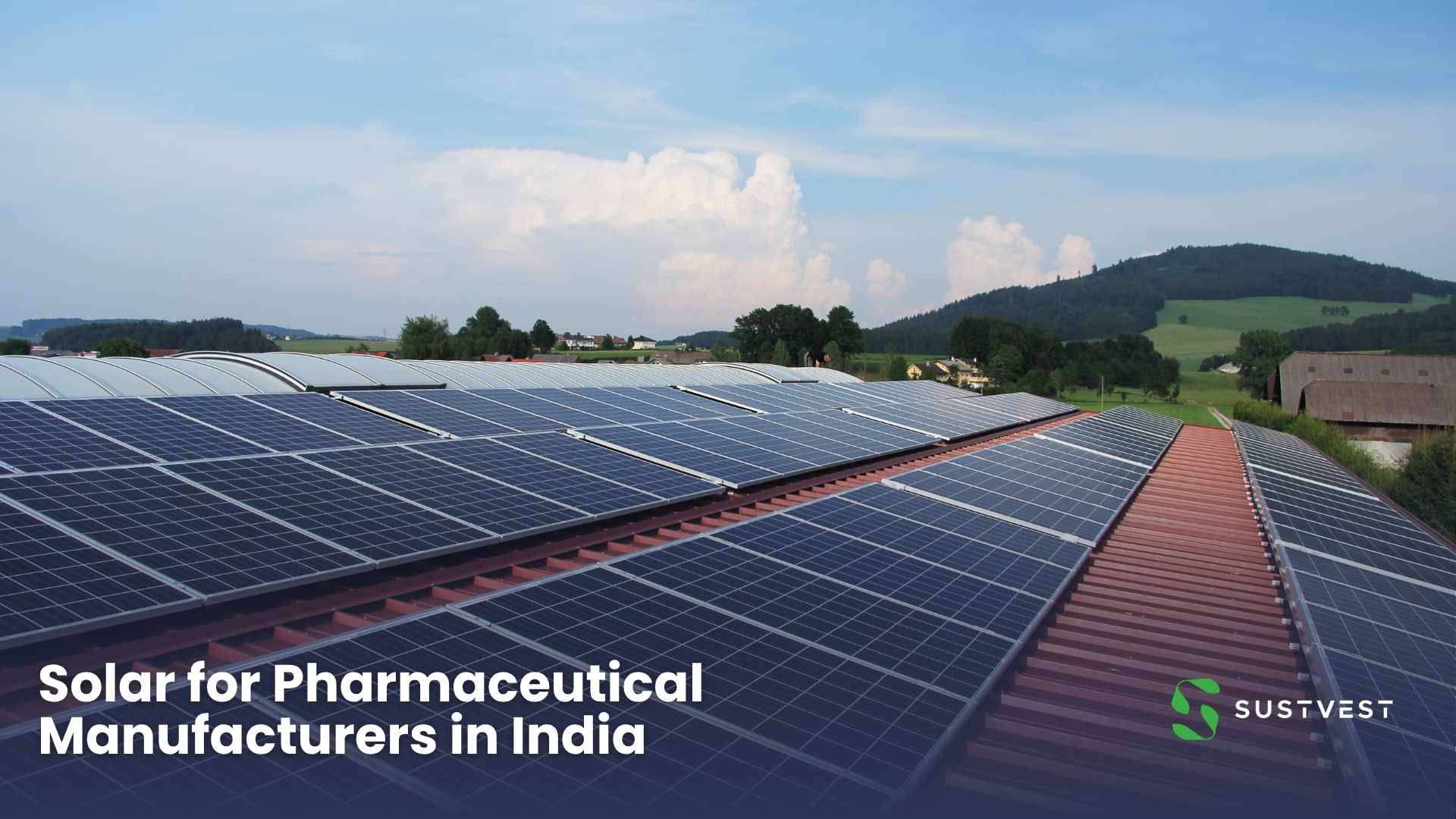
Solar for Pharmaceutical Manufacturers in India
Pharmaceutical manufacturing is among the most energy-intensive industries in India — and for a specific reason that makes it an unusually strong fit for rooftop solar. Cleanrooms, HVAC, chillers, water treatment, cold storage, and quality-control labs draw substantial power around the clock, and much of that load runs during daylight hours when solar generates. But pharma also has additional requirements that materially affect how solar must be designed and installed: contamination control, GMP compliance and validation, and high power-reliability requirements. Getting solar right for a pharma plant is as much about how it's done as whether to do it.
Pharmaceutical plants are strong candidates for rooftop solar because they run energy-intensive loads, many of which operate for long hours or continuously depending on the facility and process — cleanroom HVAC, chillers, refrigeration, water systems, and process equipment — that align well with solar generation, supporting high self-consumption. Many pharma sites also have large rooftops across production, warehouse, and lab buildings. The sector-specific considerations are what matter most: solar installation and works must not disturb cleanroom integrity, contamination control, or GMP-validated systems; and because pharma processes are highly sensitive to power interruption, system design must protect critical loads. As always, the actual savings depend on your load, tariff, and roof — so the reliable numbers come from modelling your specific facility, not a headline percentage.
Here's why the fit is strong and what's different about doing it right.
Why is pharmaceutical manufacturing such a good fit for rooftop solar?
Because pharma is electricity-intensive and much of its load runs continuously — so a high share of solar generation can be consumed on site rather than exported. Unlike a single-shift factory, a pharma plant's biggest loads run around the clock or close to it:
Cleanroom HVAC — maintaining the air changes, temperature, humidity, and pressure that GMP cleanrooms require is one of the largest and most continuous electrical loads in a pharma facility; HVAC can account for a substantial share of a cleanroom's energy use.
Chillers and refrigeration — cooling for processes, storage, and cold chain runs continuously.
Water treatment — water treatment and pharmaceutical-water systems can represent significant electrical loads, depending on the facility and process.
Process equipment, labs, and packaging — reactors, dryers, QC labs, and packaging lines through production shifts.
That substantial, largely round-the-clock demand means a pharma plant tends to consume a high proportion of its solar generation on site when the system is sized to the load — and self-consumption is what drives value where exported power is credited below the retail rate, as we explain in net metering vs net billing. Add large rooftops across production, warehouse, and lab blocks, and the physical and economic fit is strong.
The same principle from our manufacturing solar guide applies: value comes from matching generation to on-site consumption, sized to the actual load.
What's different about solar for a pharma plant?
Two things set pharma apart from other industrial sectors: GMP/contamination sensitivity, and mission-critical power reliability. Both shape how solar should be approached — and getting them wrong is far more consequential than in a standard factory.
GMP and contamination control. Cleanrooms operate under strict environmental control and GMP validation (India's revised Schedule M sets the statutory GMP framework). Solar installation and any associated roof works must not compromise the cleanroom envelope, air-handling systems, pressurisation, or the validated state of the facility. This means the installation has to be planned around the facility's contamination-control and validation requirements — roof penetrations, dust-generating work and any interaction with HVAC or building systems assessed through the facility's applicable change-control and contamination-control procedures. This is a reason to use a developer who understands regulated pharma environments, not a generic rooftop installer.
Mission-critical power reliability. Pharmaceutical processes — sterile manufacturing, cold chain, continuous water systems — can be highly sensitive to power interruption; an outage can mean spoiled batches, broken cold chain, or compliance issues. Rooftop solar interacts with this in two ways worth understanding. First, a standard grid-tied solar system typically shuts down during a grid outage (for safety) unless designed with appropriate backup/islanding architecture, so solar is not, by itself, a backup power source. Second, the system must be designed and integrated to maintain appropriate power quality and avoid adversely affecting sensitive loads. Solar reduces your energy cost; protecting continuity is a separate design requirement that a pharma-aware developer plans for from the start.
These aren't reasons not to go solar — pharma plants are excellent hosts — but they're reasons the work must be done by a team that understands regulated manufacturing.
Does solar help pharma companies with ESG and export-market expectations?
Yes — and it matters more for pharma than for many sectors, because Indian pharma is heavily export-facing and increasingly subject to customer and market sustainability expectations. Indian pharmaceutical companies supply regulated markets worldwide, and global pharmaceutical procurement and supply-chain programmes are placing increasing attention on emissions, sustainability and environmental performance. On-site solar produces metered renewable-generation data that can support:
ESG and emissions reporting — metered renewable generation can provide useful evidence for electricity and emissions reporting, but the treatment of the generation and its renewable attributes depends on the reporting framework, ownership and contractual arrangements.
Corporate decarbonisation targets — many pharma majors have public renewable-energy commitments that flow down to their operations and suppliers.
A note on accuracy, consistent with how we cover this for the automotive sector: metered solar data supports a renewable-energy claim, but making a specific claim also depends on the contractual and reporting arrangements and how the renewable attributes are treated. Robust monitoring is the evidence base, alongside those arrangements. Requirements vary by customer, market, and framework, so this is a growing commercial expectation rather than a single universal rule.
What determines the savings for a pharma facility?
The savings depend on your tariff, self-consumption share, roof, and sizing — not a single national figure. The levers that actually move the outcome:
Your electricity tariff. The applicable industrial/HT tariff determines the value of each unit of grid electricity displaced.
Self-consumption share. Pharma's continuous load tends to support high self-consumption when the system is sized to it — the biggest driver of value where exports are credited below the retail rate.
Roof suitability. Large pharma rooftops suit solar, but the structure must be assessed, and the assessment must account for cleanroom HVAC equipment, ducting, and roof penetrations already in place.
Demand charges. For plants with significant demand charges, pairing solar with battery storage may help manage peaks where the tariff structure rewards it — and storage can also form part of a continuity strategy for critical loads (a separate calculation from cost savings).
Reliability design. Protecting critical loads and avoiding any disturbance to sensitive processes is part of the engineering, not an afterthought.
Because these vary so much between plants, the only reliable way to know your savings is to model your actual load profile and tariff — which is why a credible proposal starts with your consumption data and a facility assessment, not a per-square-foot estimate. We explain how project cost itself is built up in our rooftop solar cost guide.
Can rooftop solar meet a pharma plant's full power demand?
Usually not on its own — rooftop solar often cannot cover a pharmaceutical plant's entire electricity demand because available roof area limits PV capacity and solar generation occurs only during daylight hours, while many facilities also have substantial evening and night-time demand. Rooftop solar may therefore be combined with open access to increase the renewable share. Rooftop solar is the efficient on-site foundation: self-consumed, behind-the-meter generation does not require the wheeling and transmission arrangements associated with procuring electricity from an off-site open-access project. But a large, continuously-running pharma plant can consume far more than its roof produces, especially given the round-the-clock HVAC and chiller base load that solar can't cover at night. So covering a larger share of demand — or meeting a corporate/customer renewable target — often means adding off-site renewable power.
That's where green open access comes in: renewable power from a large off-site plant delivered through the grid, sometimes via a group-captive structure, though the economics are highly state-specific. One possible strategy is to optimise rooftop solar for the daytime load and then evaluate open access and storage for the remaining renewable-energy requirement.
Should a pharma company use OPEX or CAPEX for solar?
Either works; the choice depends on your balance sheet, tax position, and appetite for owning the asset — the standard C&I funding decision. Under CAPEX, you fund and own the system and retain its ownership economics (including tax benefits such as depreciation, where your business can use them); under OPEX/RESCO, a developer funds and owns it and you buy the power, typically without the upfront capital expenditure required under a CAPEX purchase. We compare the two in OPEX vs CAPEX solar for business.
One pharma-specific point: because the installation touches a GMP-regulated environment, the developer's competence and long-term reliability matter under either model — but under OPEX, where the developer owns and maintains the system on your site for years, their understanding of regulated pharma operations and their O&M capability are especially important. Metered generation data can be available under either model; however, the ability to make specific renewable-electricity or emissions claims depends on the contractual allocation and treatment of the relevant renewable attributes. Multi-site pharma groups sometimes use both.
The bottom line for pharmaceutical manufacturers
Pharma is a strong load profile match for rooftop solar — energy-intensive demand, much of it running long hours, that aligns well with generation, on large rooftops, at facilities that pay industrial tariffs and increasingly face export and ESG expectations. What makes pharma different is that the how matters as much as the whether: the installation must protect cleanroom integrity and GMP validation, and the design must safeguard the power reliability that pharma processes depend on. Handled by a developer who understands regulated manufacturing, solar is one of the clearer levers a pharma company has on both operating cost and sustainability — but the right system is the one designed around your specific plant, its loads, and its compliance requirements.
SustVest designs rooftop solar for pharmaceutical and other regulated manufacturing facilities under OPEX and CAPEX models — sized to your actual load, installed with care for contamination-control and continuity requirements, and backed by in-house monitoring and O&M that produces metered generation data for your ESG and customer reporting. Ranked #8 in CRISIL Intelligence's CY2025 Top 10 rooftop solar project-developer ranking (India Solar Rooftop Map, December 2025), with 84+ projects delivered across 13+ states (company-reported figures). Book a free site assessment to see what your plant's roof and load can deliver.
Frequently Asked Questions
Is rooftop solar suitable for pharmaceutical manufacturing plants? Yes — pharma plants are a strong fit because energy-intensive loads like cleanroom HVAC, chillers, refrigeration, and water systems run largely around the clock, aligning well with solar generation and supporting high self-consumption. The important caveat is that installation must be planned so it doesn't compromise cleanroom integrity or GMP-validated systems, and the design must protect the power reliability pharma processes depend on.
Can solar be installed without disrupting GMP cleanroom operations? It can, but it requires a developer experienced with regulated environments. Solar installation and associated roof works must be planned around the facility's contamination-control and validation requirements — handling roof penetrations, dust-generating work, and any interaction with HVAC and building systems through the facility's applicable change-control and contamination-control procedures. This is why pharma solar should not be treated as a generic rooftop installation.
Does solar provide backup power for a pharma plant during outages? Not on its own. A standard grid-tied rooftop solar system typically shuts down during a grid outage for safety, unless it is specifically designed with backup or islanding architecture. Solar reduces your energy cost; protecting continuity for critical pharma loads is a separate design requirement, which can involve storage or other backup systems, and should be planned from the start.
How much can a pharmaceutical company save with solar? There is no single figure — savings depend on your electricity tariff, how much of the solar you consume on site, your roof, and system sizing. Energy-intensive pharma plants on industrial tariffs generally see solar displace meaningful grid cost. The reliable way to estimate savings is to model your actual load profile and tariff rather than rely on a percentage rule of thumb.
Does solar help pharma companies meet ESG and export requirements? It can. Indian pharma is heavily export-facing, and global pharmaceutical procurement and supply-chain programmes increasingly place attention on emissions, sustainability, and environmental performance. On-site solar produces metered renewable-generation data that can support customer sustainability programmes and emissions reporting — though the treatment of the generation and its renewable attributes depends on the reporting framework, ownership, and contractual arrangements, and requirements vary by customer and market.
Can rooftop solar power an entire pharmaceutical plant? Usually not on its own, because pharma's high, round-the-clock demand — especially night-time HVAC and chiller base load — typically exceeds what the roof can generate. Rooftop is the on-site foundation; plants aiming for a higher renewable share often add green open access (sometimes via group captive) and storage, starting with rooftop and layering off-site renewable power for the rest.
Sources
Industry reporting on pharma-sector solar (2026) — pharma as a highly energy-intensive manufacturing sector; continuous loads (cleanroom HVAC, chillers, refrigeration, water treatment, labs, packaging); large rooftops; ESG/export sustainability drivers
Cleanroom energy characteristics — HVAC as the dominant, continuous energy load in GMP cleanrooms (a very large share of cleanroom energy use); air-change requirements by ISO class
Revised Schedule M (Drugs and Cosmetics Rules) — statutory GMP framework for pharmaceutical manufacturing in India (premises, environment, grades, validation)
Net-billing / self-consumption economics; Green Energy Open Access Rules, 2022 — see linked SustVest posts; state-specific charges
SustVest — rooftop solar delivery for C&I including regulated manufacturing; 84+ projects, 13+ states (company-reported figures); CRISIL Intelligence CY2025 #8 ranking